

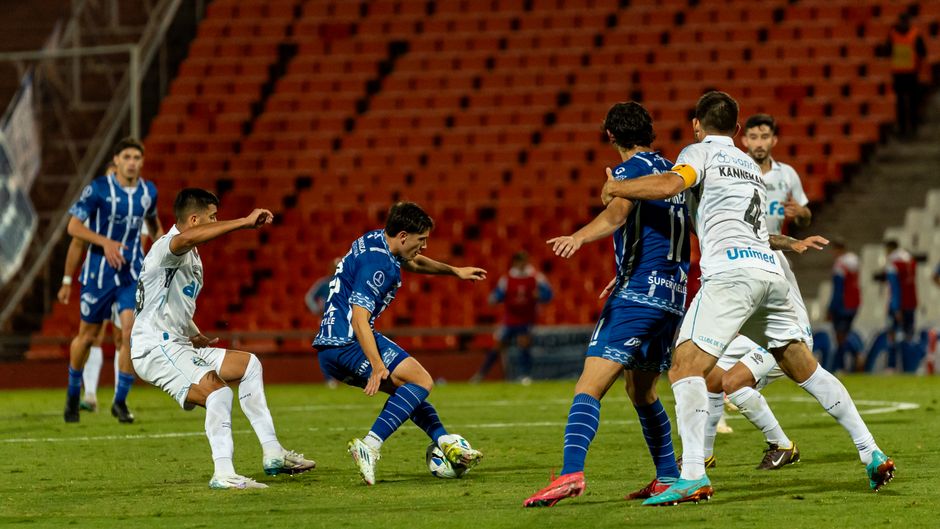
Unlocking Catenaccio - Italy's Defensive Masterclass
Picture Milan in 1963. A stocky Argentine with slicked-back hair and an almost theatrical intensity stands in the middle of the training ground, shouting instructions in rapid-fire Italian. His defenders hang on every word. This is Helenio Herrera, a man who would soon turn Inter Milan into a machine so formidable, so deeply drilled, that opponents would spend entire matches chasing shadows. The system he perfected—the one that would become known across the world as catenaccio—was never simply about defending. It was about control, discipline, and the brutal art of making the other team play exactly the way you wanted them to.
Few tactical ideas in football carry as much baggage as catenaccio. The word itself—Italian for the chain or the bolt, echoing the image of a heavy padlock snapped shut—summons visions of ten men behind the ball, cynical fouls, and scoreless draws stretching into eternity. That reputation is only half the story, and honestly, it is the least interesting half. To understand catenaccio properly, you have to strip away the cliché and look at what Herrera actually built, why it worked, and why the libero position it depended on has never truly been replaced. xoilactv goes into the finer points.
The Man Behind the Padlock
Herrera was not Italian by birth. He was born in Buenos Aires in 1910 and moved to France as a young man, where he began constructing a coaching philosophy that blended rigid defensive organisation with modern psychology—motivational techniques, positive reinforcement, almost a salesman's charisma. When he arrived at Inter in 1960, he inherited a squad with talent but introduced something more important than any individual signing: a shared belief system.
What Herrera built at Inter, the team affectionately known as La Grande Inter, was a 5-3-2 defensive shape that folded into something far more intricate. He took an existing Italian defensive idea—verrou, the bolt, defensive man-to-man marking with a spare man behind—and added layers. The result was a team that won the European Cup in 1964 and 1965, plus three Serie A titles. Not exactly the record of a bunch of cynical spoil-sports.
The Libero: The Spare Man Who Made It All Work
The heart of the system was the libero, a role that has largely vanished from the modern game and is worth savouring. The word means "free," and that is the key. Behind the man-marking defenders—the stopper markers dutifully tracking their assigned strikers—sat a single player with no marking responsibility. He was the sweeper, the insurance policy, the one man who could read the whole pitch and act on what he saw.
The Dutch legend Johan Cruyff once described the libero perfectly: it was the guy who cleaned up the mess that others created. But tidy clearing was only the beginning. A great libero did three jobs at once:
- Last-line sweeper: covering the space in behind whenever a marker was beaten, sweeping up any through-ball or flick-on.
- The interceptor: stepping into midfield to cut out passes early rather than waiting for the danger to arrive.
- The launch pad: carrying the ball out from the back, often into midfield, to start counter-attacks in the blink of an eye.
The greatest exponent was probably Gaetano Scirea, whose calm reading of the game at Juventus in the 1970s and 1980s made the libero look like a luxury rather than a necessity. But Herrera's Inter had its own version: the uncompromising yet technically sound defenders around whom the machine was built, complemented by midfielders who understood the rhythms of pressing and dropping as one.
Here, the system created a psychological trap. The opposition could dominate possession and feel superior, but they were always one mistake away from being punished on the counter.
Why Catenaccio Feels Like More Than Simply Defending
The greatest misunderstanding about catenaccio is that it was merely the opposite of attacking football. It was actually a system of bait and punishment. Inter would sit compact, deny any space in central areas and invite opponents forward. The moment a pass went astray or a dribble was lost, the counter began: a quick lay-off to a midfielder and one of the forwards—the likes of Sandro Mazzola or the Brazilian Jair—was racing into open space.
Herrera was often quoted as saying a team with an outstanding defence would always beat a team with a great attack. That was not sloganeering. His players understood the math: if you concede nothing, you only need one moment of quality to win. But the machine also needed fear to function. Opponents who knew a single stray pass could be punished within eight seconds often played tighter, chose safer options, and lost the freedom they needed to create.
The Myth of the Boring Italian Defence
This is where the narrative gets too neat. In reality, defending well is entertaining—there is craft, timing, positioning and bravery involved. The best catenaccio sides did not knock the ball around aimlessly for ninety minutes; they were aggressive in the challenge, expert at tight marking and absolute masters of the dark arts of competitive but legal disruption.
Context matters, too. In 1950s and 1960s Italy, pitches were heavy, refs were leniently whistled and pitches were mud. Man-to-man marking with a covering libero suited the conditions. And crucially, the Italian game had never actually been without its artists. Around the defensive scaffolding at Inter stood players like Luis Suárez, a Spanish-born playmaker who won the 1960 Ballon d'Or and whose passing turned defence into attack faster than any team in Europe. That is the detail the clichés always omit.
What Modern Defenders Can Learn from the Libero
The true libero is gone, but the ideas are alive. Modern football has essentially split the role in two: the ball-playing centre-back who carries possession forward and the hybrid midfielder who drops into the back line. If you want to bring catenaccio spirit into your team's defensive philosophy today, a few practical principles apply:
- Give every marker a spare. Always have one player reading the game behind the man-markers—a covering centre-back or a defensive midfielder sitting deep.
- Defend as a unit, not as individuals. Catenaccio was built on collective organisation: shifting as one, compacting space, suffocating the middle.
- Attack the moment you win the ball. The first five seconds after a turnover were the most lethal part of the system. Coach the transition, not just the shape.
- Read the game, don't just react to it. The libero earned his name because he was free—free to think, anticipate and step out early. Encourage defenders to be proactive interceptors.
Even pressing-heavy modern systems owe a debt to catenaccio. A high block is, in essence, a chain reaction built to force mistakes. The intellectual lineage is there even if the shape looks nothing like the one Herrera used.
A Philosophy in Numbers
Herrera's Inter conceded remarkably few goals across its great seasons, but its success was reflected in results, not neat statistics. The team won back-to-back European Cups by beating the finest attacking sides of Europe while scoring far fewer than its opponents expected. Rightly, this is still studied in coaching courses across Italy today as a model of collective defensive intelligence. The idea that defending was their whole game remains wrong—defending was simply what made success possible. And that is the fine distinction that separates catenaccio from mere negativity.
The Enduring Lesson of the Chain
Catenaccio deserves to be remembered without the cartoonish padlock. It was never the villain of attacking football, just a deeply intelligent opponent of chaos. Herrera's men worked because they understood that freedom without structure is reckless, and structure without intention is dull. The libero gave every teammate confidence to press; the compact block gave every attacker the licence to counter. Whether you love or hate the idea of parking a chain across the box, there is something quietly brilliant about a system built around a spare man who simply reads the danger before anybody else sees it. Catenaccio's real legacy is not negativity—it is the timeless truth that the team which controls space will usually control the result. And that is not boring at all.


Budgeting
-
Compare regular outgoings, switch to better tariffs where possible, and reduce energy use through small habits that add up over time.


Debt Help




-

Long established fact that a reader will be distracted
-

Long established fact that a reader will be distracted
-

Long established fact that a reader will be distracted




Saving
Karla Gleichauf
12 May 2017 at 05:28 pm
On the other hand, we denounce with righteous indignation and dislike men who are so beguiled and demoralized by the charms of pleasure of the moment
M Shyamalan
12 May 2017 at 05:28 pm
On the other hand, we denounce with righteous indignation and dislike men who are so beguiled and demoralized by the charms of pleasure of the moment
Liz Montano
12 May 2017 at 05:28 pm
On the other hand, we denounce with righteous indignation and dislike men who are so beguiled and demoralized by the charms of pleasure of the moment